By Gavin Paladino
Nymphing is my favorite way to fly fish because it produces the most fish in trout streams, especially during the winter when fish are holding deep. At first glance, I used to think this method of fly fishing was tedious because of how nymph rigs are set up (split shot, indicator, double nymph rigs, etc.), but I soon learned that couldn’t be further from the truth.
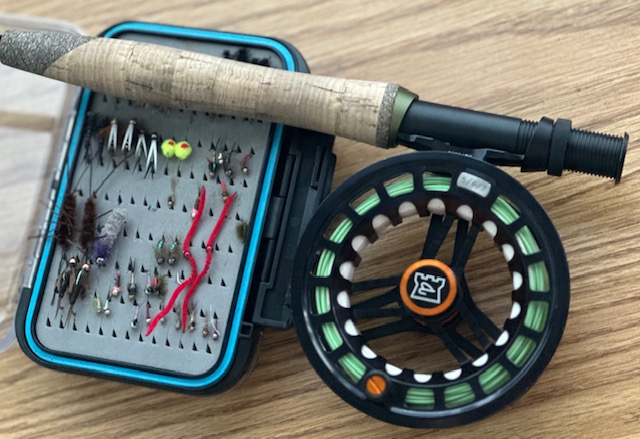
Nymphing is a method of fly fishing that involves using flies that are meant to imitate actual underwater bugs (nymphs). They are usually weighted with a bead head so that they can sink to the bottom where fish hold, but most anglers also use split shot to assist with this. In many situations, a strike indicator is also useful for detecting strikes when nymphing longer distances. On the other hand, there’s high-stick nymphing. This is a more tactile style of nymphing without an indicator, and it is suitable for small to medium-sized streams.
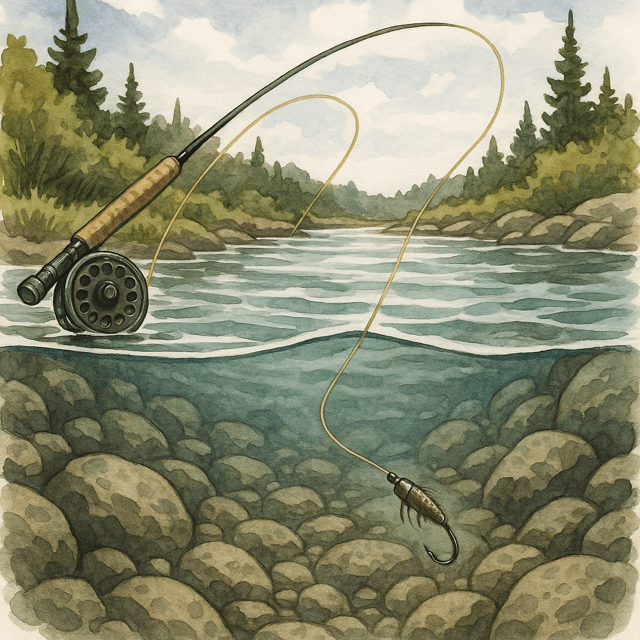
So, why is nymphing so effective compared to throwing streamers or dry flies in the fall and winter seasons? Because that’s when most trout feed below the surface, where most of their available food lives (nymphs). Cold water slows trout metabolism. They still need calories, but they don’t want to burn much energy chasing fast-moving prey. Nymphs are meant to mimic larval or pupal stages of aquatic insects, and they are meant to drift slowly near the bottom. In fall and winter, fewer adult insects hatch and take flight, so dry-fly action slows down. But, the immature forms can be mimicked by using nymphs.
 Fly Fishing: A beginner's experience
Leave a comment